There Can Be No "Ordinary Barbie"
I recently described myself as a person who doesn’t experience anger, but I don’t think I was listening to the words coming out of my mouth. I was too lost in thought. I thought, I am the only of my coworkers to never raise my voice. When old friends uninvited me to a night out I’d planned-- and changed to accommodate them-- I said I hoped they had fun and started to take my makeup off. Nobody (but my father) would describe me as a person who “likes to pick fights.” For years, I’ve been proud of my ability to remain calm and collected when life— and the people I encounter throughout it— prove frustrating and harsh. Maybe this is because I’ve always appreciated when someone angry with me still found a way to be gentle. Because I grew up expecting raised voices to meet my mistakes. Because I learned from them most when people talked to me like they believed that I could.
So, this quality— unconditional courteousness— was added to my list. The one every girl has etched into the bones of her skull, of all the million things they need to be, to be, and deserve what is good.
A few months ago, on what might have been a date with a man who I hope to always call friend, I let some of my list escape my lips, breaking its very first rule….
Womanhood is supposed to be effortless. It is supposed to be riding bikes down Second Avenue in long flowing dresses and short heels. It is brushing your hair away from your face as you come up from under a wave. It is applying powder and perfume on the outside of each new door you walk through.
But biking in long flowing dresses and heels leaves red inner thighs and blisters. The second it takes to fix your hair before emerging from the ocean is a second of air lost– I give it up even when it is the very last one I can afford to. And every compact and bottle we women carry weighs down more than our purses.
I was not supposed to mention the list etched into the bones of my skull to that friend of mine because it, like stagehands, is not supposed to exist to the audience. I am supposed to be a person that is kind, accommodating and reliable, intelligent, daring, beautiful, and unconditionally courteous, not a person that tries to be.
That, I told my friend, is what it is to be a woman in the 21st century. I told him that girls who become women like me grew up with parents and role models that told them they could be anything, and heard instead, you need to be everything. I found myself, sitting by the water at Domino Park, holding back tears for the smooth skull I had as a girl. Watching memories of male relatives and peers belittling real housewives and laughing off young climate activists, remembering how they carved into my bone as I lived them. I held back tears for the younger, less calculated version of myself that wouldn’t have collapsed crying into her best friend’s arms as the credits of the Barbie movie rolled.
I, like almost every girl I know, saw Barbie opening weekend. I knew, from slight internet spoilers I couldn’t avoid, that it was not going to be all dancing, fabulous outfits, and Ryan Gosling’s anticipated musical number. But what I didn’t know is that it would force me to confront my list. That America Ferrera’s monologue— though nothing I hadn’t thought of, and mentioned to most of the women I know, a hundred times before— would bring tears to the eyes of a theatre full of women from all walks of life. Later in the film, Ferrera’s character asks for an “ordinary Barbie,” one that is allowed to just be single and looking for a sugar daddy that will show her a world she couldn't see as a child, or a mom saving up to buy a restaurant she may never be able to afford. And, though I laughed and felt seen by the suggestion when her character made it, I realized later that, if we are to suppose, as the film asks us to, that all women are Barbie, and Barbie is all women, then ordinary Barbie is an impossibility:
There is so much thing as an ordinary woman.
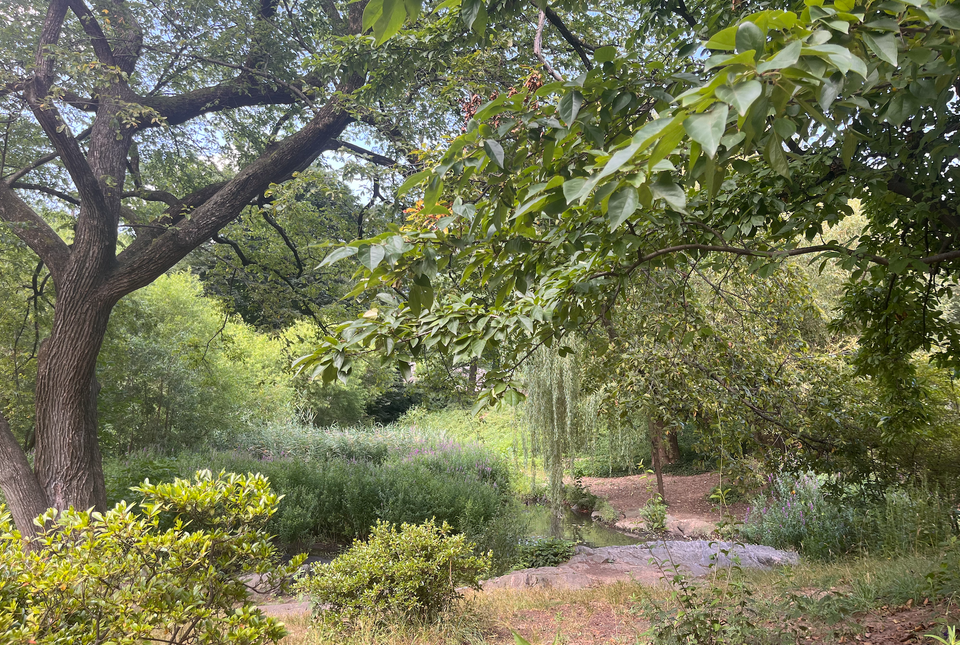
Today I am writing from Central Park. A few minutes after I chose a flat-ish rock to sit and write on, a blonde woman in a blue top and aqua headband took a seat on a less-flat rock twenty feet away. We sat like this for 30 minutes, both aware of the other’s presence, both smiling subtly at the other’s solitude while their head was turned away. No words were exchanged between us, but none had to be for me to understand that she was just as relieved as I was to see another woman enjoying an afternoon alone.
The truth is that every person experiences anger. I get angry every time I tell a man about the impossible standard I will always hold myself to and they say “Just try to take some of the pressure off yourself.” Like that pressure is a boulder I chose to slip under. Like it is not a pile of rocks on my chest that grows as I age. Like I have the power to silence a sea of voices with only my own.
Still, I value my gentleness. I am proud to be kind, accommodating and reliable, intelligent, daring, beautiful, and unconditionally courteous. But, though I am not supposed to, I take most pride in the fact that these are things I try to be.
My list isn’t going anywhere. Though it is unfair, and maybe an idea that I can’t quite call mine, I do want to be everything. But I am trying. Trying to give myself the grace I extend to everyone else. Trying to cope with missed deadlines and the days I spend in front of my tv. Trying not to think about the makeup I left in its bag this morning, and the knotted mess of usually water-falling curls clipped to my head, because, when I don’t, I feel just as pretty. And right now, because I feel so myself, I am trying not to care if it is classy to be drinking wine from a can alone, on a flat-ish rock in Central Park, at 2:55 pm on a Monday.
Signed,
A New Romantic